Five years ago.

Each year with the changing
of the seasons, humpback whales migrate along the eastern coastline of
Australia between the southern Tropics and the Antarctic. The majority of
humpbacks in Australian waters migrate north from June to August, and back
towards the Southern Ocean from September to November. After spending the
southern summer feeding in the colder waters near the south pole, they travel up to 5000 kilometres north to warmer seas where they reproduce.
Humpbacks range all the way to Cape Tribulation in the Great Barrier Reef. During
their migration Humpbacks sometimes come close to shores. Hervey bay is a
favourite playground of these magnificent animals.


Whale watching is an enjoyable and interesting experience and is popular in many locations around the world. Hervey Bay is the whale watching capital of Australia.

The first sign of a whale is the blow, a bushy double stream of spray that rises about 3m high. This blow is an exhalation of water by the Humpback as it breathes through two blowholes near the top of the head.


Sometimes a whale pokes its head out of the water for up to 30 seconds to take a look around. This is called spyhopping.


 Humpback whales are very agile, propelling themselves with their tail fins to make high jumps out of the water.
 Lobtailing. When humpbacks slap their tail on the water's surface making a very loud sound.


 Australia has one of the highest rates of species extinction in the world. In 1963 when the Australian east coast whaling industry ended, the east coast population of humpbacks had been reduced to a little over 100 individuals. This population recovered steadily and in 2006 their numbers were estimated at around 8000.
 There are reports that humpback whale populations in Australian waters have recovered to the extent that they may be down-listed from the official list of threatened species. The recovery of the humpback population has contributed significantly to the rapid growth of Australia’s whale watching industry.


Humpbacks range in color from white to gray to black to mottled.


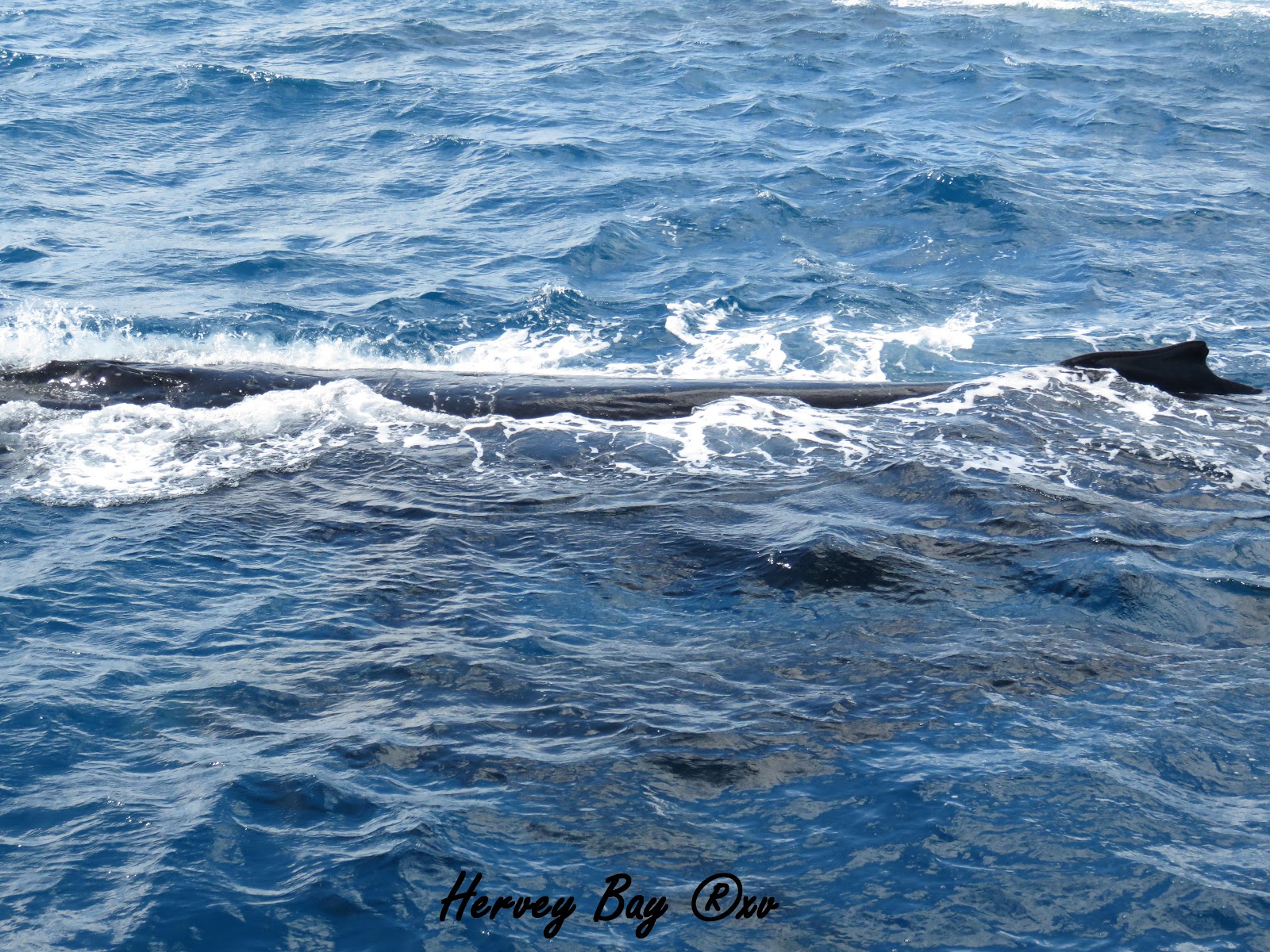
The stubby dorsal fins are
visible when the whale surfaces.


There are distinctive patches of white on the underside of the flukes. Like the identifiable patterns on their pectoral, these markings are unique to each individual whale.


Whilst fish swim by moving their tails left and right, whales swim by moving their muscular tail or flukes (up to nearly 4m wide) up and down.


The humpback's skin is frequently scarred and often covered with barnacles.

The smooth streamlined shape of an adult whale allows it easy movement through water.
Humpback whales live at the surface of the ocean, both in the open ocean and shallow coastline waters. They prefer shallow waters when not migrating.

Logging is when a whale is resting at the surface of the water, with its tail down.

The Humpback Whale is the fifth largest of the aquatic mammals. Humpbacks grow up to 16m long, around 40 tonnes in weight, and live up to 50 years or more. Humpback whales are an endangered species.